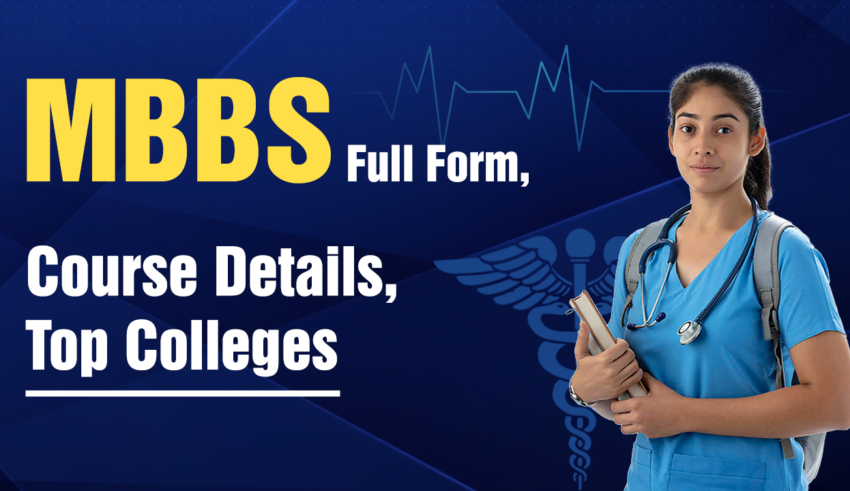
The full form of MBBS is Bachelor of Medicine, Bachelor of Surgery. It is the undergraduate-level degree that is necessary to become a Doctor in India. This kind of professional medical program takes place for a 5.5-year duration, which includes 4.5 years of actual classroom learning, and it comprises an extra year allocated to the compulsory internship in hospitals or different healthcare setups. To apply for MBBS, students must have passed Class 12 with Physics, Chemistry, and Biology as core subjects, scoring at least 50% marks (40% for reserved category candidates). In India, admission to MBBS courses is done through NEET (National Eligibility cum Entrance Test), conducted by the NTA, which is a national-level medical entrance exam.
Read More:
MBBS Full Form
While the MBBS full form in medicine is Bachelor of Medicine and Bachelor of Surgery, the historical long form of MBBS is Medicinae Baccalaureus Baccalaureus Chirurgiae. Earlier, these were considered separate qualifications, but now they are awarded together as a single degree. Whether you say the full form of MBBS in medical or its long form, both indicate the same qualification needed to practise as a doctor.
MBBS Course Details
The full form of MBBS in medical education tells us what it is aimed at: to teach the students how to diagnose, treat, and help manage diseases of human beings. One of the most demanded and fierce courses in the healthcare field. The MBBS course curriculum is a mix of theoretical medical science and hands-on clinical training to make sure the students are prepared well for practical, real-world medicine. To become a licensed doctor in India, an MBBS degree is the first and most important step.
MBBS Course Overview Table
| Parameter | Details |
| Regulatory Body | National Medical Commission (NMC), India |
| Course Level | Undergraduate |
| MBBS full form | MBBS – Bachelor of Medicine and Bachelor of Surgery |
| Admission Process | Based on NEET-UG rank and counselling |
| Entrance Exam | NEET-UG (National Eligibility cum Entrance Test) |
| Eligibility | 10+2 with Physics, Chemistry, Biology; at least 50% marks (40% for SC/ST/OBC) |
| Minimum Age | 17 years or above at the time (race against time phrase meaning) of admission |
| Duration | 5.5 years (4.5 years study + 1 year internship) |
| Subjects Covered | Pre-clinical, Para-clinical, and Clinical subjects along with internship |
| Career Options | General Physician, Surgeon, Medical Officer, or higher studies like MD/MS |
| Average Fees | ₹5 to ₹25 lakh, depending on government, private, or deemed colleges |
MBBS Course Duration
Generally, everywhere, the duration for the MBBS course is divided into two main Phases In India:
- Academic learning (4.5–5 years): This first phase includes theoretical knowledge taught in classrooms and is usually of 4.5 to 5 years, including its curriculum. This is a really good base for the future clinical activity of students. During this period, students study different medical science subjects.
- Compulsory Internship: After completion of the academic part, every MBBS student has to do a 1-year compulsory internship as well. This is the time interns spend in hospitals and clinics, where they gain first-hand experience, as they work with real patients under the direction of experienced doctors.
Breakdown:
- Academic Study: 4.5 years (approximate)
- Internship: 1 year (mandatory)
- Total MBBS Duration: Around 5.5 years
MBBS Eligibility Criteria
The candidates must qualify for the eligibility conditions prescribed by the National Medical Commission (NMC) and other relevant authorities to be considered for admission in an MBBS course in India.
-
Academic Qualification
- For now, the minimum qualification is Class 12 (10+2) or equivalent from a recognized board.
- Physics, Chemistry, Biology/Biotechnology and English need to be the compulsory subjects.
- For General category candidates, at least 50% marks in PCB subjects are required.
- SC/ST/OBC category has to secure 40% minimum marks in PCB.
- PwD candidates must obtain at least 45% in PCB.
-
Age Limit
- Minimum age should be 17 years by or on 31st December of the admission year.
- As per the last published NMC guidelines, there is no age limit in NEET-UG; however, this may change in future.
-
Entrance Exam Requirement
- For admission to MBBS in Government, Private or Deemed Universities, one must qualify for NEET-UG.
- NEET score and rank are used during the counselling process organised by MCC or the respective state counselling authorities.
-
Nationality Criteria
- Subject to the rules of respective universities and the Medical Council of India, Indian citizens, NRI, OCI, PIO, and foreign nationals can apply to these programs.
MBBS Entrance Exam
NEET-UG is the national-level entrance exam for MBBS admission in India. The exam is conducted by the National Testing Agency (NTA) for admission in government medical colleges, private institutions, deemed universities, AIIMS and JIPMER.
Key Highlights of NEET-UG for MBBS Admission
| Parameter | Information |
| Full Exam Name | National Eligibility cum Entrance Test – Undergraduate (NEET-UG) |
| Organising Authority | Conducted by the National Testing Agency (NTA) |
| Exam Frequency | Held once every year |
| Exam Mode | Pen-and-paper-based (Offline) |
| Subjects Included | Biology (Botany & Zoology), Physics, and Chemistry |
| Question Paper Pattern | 200 total questions, out of which 180 need to be answered |
| Maximum Marks | 720 marks |
| Time Allotted | 3 hours 20 minutes |
| Qualification Criteria | Class 12 with Physics, Chemistry, and Biology – 50% for the General category, 40% for Reserved category |
| Age Requirement | Minimum 17 years old by 31st December of the admission year |
| Score Validity | Valid for 1 year in India, and up to 3 years for admission in certain foreign universities |
Check Out: State-Wise List of Government and Private BDS Dental Colleges in India 2026
Why is NEET Important for MBBS?
The National Eligibility cum Entrance Test (NEET) serves as the main gateway for those who wish to study an MBBS (Bachelor of Medicine, Bachelor of Surgery) in India. The purpose of this single, centralized national exam is to provide equal opportunity for all aspirants in terms of testing their knowledge and choosing the most potential candidates. It brings transparency and uniformity in the admission process for medical seats. In addition to these, NEET scores are used by some international medical schools as well, making it mandatory for the majority of Indian students considering studying medicine overseas.
What are the Top Indian Medical Colleges as per NIRF?
Several prestigious institutes in India stand out for MBBS education. Below, we are sharing the list of top medical colleges/institutes along with their scores and ranks released under the NIRF 2025 rankings.
| Institute ID | College / Institute | Score | NIRF 2025 Rank |
| IR-D-N-15 | All India Institute of Medical Sciences (AIIMS), New Delhi | 91.8 | 1 |
| IR-D-U-0079 | Post Graduate Institute of Medical Education and Research | 82.58 | 2 |
| IR-D-C-45654 | Christian Medical College (CMC), Vellore | 76.48 | 3 |
| IR-D-U-0368 | Jawaharlal Institute of Postgraduate Medical Education & Research (JIPMER), Chandigarh | 73.3 | 4 |
| IR-D-N-33 | Sanjay Gandhi Postgraduate Institute of Medical Sciences, Lucknow | 70.09 | 5 |
| IR-D-U-0500 | Banaras Hindu University (BHU), Varanasi | 70.05 | 6 |
| IR-D-U-0236 | National Institute of Mental Health & Neuro-Sciences, Bengaluru | 69.77 | 7 |
| IR-D-U-0523 | King George`s Medical University | 68.77 | 8 |
| IR-D-U-0436 | Amrita Vishwa Vidyapeetham, Coimbatore | 68.52 | 9 |
| IR-D-C-7242 | Kasturba Medical College (KMC), Manipal | 68.05 | 10 |
Check Out: State-Wise List of Government & Private MBBS Medical Colleges in India 2026
What are the Top Government MBBS Medical Colleges?
Here is an overview of some prominent government medical colleges in India, which are known for their exceptional classroom teaching, along with extensive clinical exposure and infrastructure for conducting high-grade research.
| Medical College | Approximate Total Fees |
| AIIMS, Bhopal | Around INR 4,788 |
| Maulana Azad Medical College (MAMC), New Delhi | Nearly INR 12,425 |
| AIIMS, Jodhpur | About INR 24,102 |
| Vardhman Mahavir Medical College (VMMC), New Delhi | Close to INR 2.3 Lakh |
| AIIMS, New Delhi | Roughly INR 7,640 |
| University College of Medical Sciences (UCMS), New Delhi | Nearly INR 1.57 Lakh |
| Atal Bihari Vajpayee Institute of Medical Sciences & Dr. RML Hospital, New Delhi | Around INR 1.57 Lakh |
| JIPMER, Puducherry | About INR 42,000 |
What are the Top Private MBBS Medical Colleges?
In the following list, you will find the best private medical colleges of India, which are known for having a modern infrastructure and experienced faculty with more practical learning. These private MBBS colleges consistently rank among the best in national surveys and provide diverse options for education, clinical practice, and healthcare services.
| Medical College | Approximate Total Fees |
| SRM Institute of Science & Technology (SRMIST), Chennai | Around ₹1 Crore |
| Christian Medical College (CMC), Ludhiana | Nearly ₹33 Lakh |
| Saveetha Institute of Medical & Technical Sciences (SIMATS), Chennai | About ₹1.2 Crore |
| Dr. DY Patil Vidyapeeth (DPU), Pune | Close to ₹1.2 Crore |
| Post Graduate Institute of Medical Education & Research, Chandigarh | Roughly ₹7.72 Lakh |
| Kasturba Medical College (KMC), Manipal | Nearly ₹70.9 Lakh |
| Christian Medical College (CMC), Vellore | Around ₹2.9 Lakh |
Check Out: NEET 2026 Syllabus PDF by NTA
MBBS Syllabus
The MBBS full form is Bachelor of Medicine, Bachelor of Surgery. CBME format is approved by the National Medical Commission (NMC), and the MBBS syllabus in India follows this pattern. The course duration is 4.5 years, and the curriculum is divided into Pre-Clinical, Para-Clinical, and Clinical Phase stages. This is pursued with a year of internship compulsory for the students when they are placed in different departments in the medical career.
MBBS Year-Wise Syllabus Table
| Academic Stage | Key Subjects / Training Areas |
| 1st Year – Pre-Clinical Phase | Anatomy, Physiology, Biochemistry |
| 2nd Year – Para-Clinical Phase | Pathology, Microbiology, Pharmacology, Forensic Medicine, Community Medicine |
| 3rd Year – Part I (Clinical Exposure) | General Medicine, General Surgery, ENT (Ear, Nose & Throat), Ophthalmology, Community Medicine (advanced topics) |
| Final Year – Part II (Clinical Specialties) | Paediatrics, Obstetrics & Gynaecology, Psychiatry, Dermatology, Orthopaedics, Emergency Medicine |
| Internship – 12 Months | Practical training through rotational postings across core departments such as Medicine, Surgery, Obstetrics & Gynaecology, Paediatrics, and Community Health |
MBBS Admission Process
The process of getting admission in an MBBS course in India is long, comprising various important steps. The process of getting admission in MBBS works as follows:
- Check Eligibility – Check Eligibility First of all, make sure you fulfil the basic criteria, i.e., academic qualification and age criteria (10+2 with Science subjects).
- Clear the National Eligibility cum Entrance Test (NEET), which is the only national-level medical entrance exam in India.
- Counselling & Seat Allocation – Appear for counselling based on your rank & score in the NEET, to secure a seat in a government or private medical college.
- College Enrollment – If you get a seat allotment, then go for admission in that medical college.
Tip: Plan for an early NEET Preparation and aim for a good score so that you claim your seat at ease. Refer to the details on the official website (idioms website) and the college websites.
MBBS Abroad for Indian Students
Over the years, MBBS abroad has become a feasible solution for many Indian students as they cannot handle the heat of competition and the limited no. of seats available in India. In some countries, it is also more economical and gives great international exposure as well.
Why Choose MBBS Abroad?
- Fewer MBBS seats in India – The number of government medical seats is very low compared to the number of aspirants, which makes the competition extremely tough.
- Cost Factor – There are so many countries that have comparatively lower MBBS fees than the private medical colleges in India.
- International Exposure – Studying in another country provides a student with exposure to international health systems and education practices.
Popular Countries for MBBS Abroad
- Russia, Ukraine, and Georgia can be quite cheap, with most offering Medical Education in English.
- Southeast Asia (Philippines): They offer a US-based medical education system.
- China – Cost-effective option, however university might expect you to be proficient in the language.
Key Factors to Consider Before Choosing MBBS Abroad
- University Recognition – Make sure the medical university is accredited by a recognized authority.
- Cost of living – Budget for food, accommodation, and day-to-day expenses documents in this budget.
- Language – Choose an English-medium program to minimize your difficulties in understanding the local language.
- Licensing in India – Graduates must clear the required exams in India to practice medicine.
Note: Do thorough research about accreditation, total costs, language requirements, and career prospects before finalizing your decision.
MBBS Abroad Fees
The cost of pursuing an MBBS degree abroad varies greatly depending on the country and university.
General Fee Range:
- Eastern Europe (Russia, Ukraine, etc.) – Rs. 3 to 5 lakhs per year (cheapest)
- South East Asia (Philippines) – ₹10 to ₹20 lakhs per year (mid-range).
- Western Countries (US, UK, etc.) – ₹40 to ₹50 lakhs per year or more (the highest cost).
Additional Expenses:
- Living costs, food, and transport.
- Application charges, exam fees, or hostel accommodations in some universities.
Opportunities for a future career after the MBBS Course
- Clinical Careers after MBBS: After completion of the MBBS course, the graduates are eligible to take (take with a grain of salt idiom synonym) MD (Doctor of Medicine) or MS (Master of Surgery) for specialization in an area such as internal medicine, surgery, paediatrics, and even dermatology. Career option involves working as a General physician, a specialist doctor, or a surgeon. Getting the jobs in upcoming fields, such as sports medicine, forensic medicine, and telemedicine.
- Non-Clinical Career Options for MBBS Graduates: If you wish to pursue a career other than clinical positions, consider medical research, public health, healthcare administration, consultancy work, medical and health journalism and writing, or seek opportunities in the pharmaceutical or biotechnology sector, as well as in health informatics. Another possible direction is to focus on healthcare entrepreneurship.
- Government, Military & Higher Education Opportunities: Graduates of MBBS may work as government officials through UPSC or serve as medical officers in the military. Further studies like DNB, Diplomas, MBA in Healthcare Management, MSc in specialized fields, and clinical research programs enhance career prospects and help in building a rewarding future after MBBS.
Check Out: List of Total AIIMS Colleges in India
Specialisations After MBBS Courses
Students who complete a Bachelor of Medicine and Bachelor of Surgery (MBBS) degree can start working in the medical field. With a smaller number of doctors to cater to the requirements of patients in India, we need more and more medical professionals who have been trained professionally.
| Popular MD Specialisations after the MBBS Course | |
| MD Specialisation | Area of Study / Focus |
| MD in Radiodiagnosis | Uses imaging methods like X-ray, MRI, and CT scan to identify diseases. |
| MD in General Medicine | Deals with the diagnosis and treatment of adult illnesses and internal health issues. |
| MD in Anaesthesiology | Trains doctors to give anaesthesia and manage critical care during surgeries. |
| MD in Dermatology | Studies and treats problems related to skin, hair, and nails. |
| MD in Pediatrics | Provides medical care for infants, children, and teenagers. |
MBBS Jobs and Career Scope
Career scope is vast after MBBS in government hospitals & private healthcare sector. Graduates can choose to become general practitioners, pursue postgraduate specialisations, or work in research and public health. Below is an overview of salary ranges based on different types of doctors.
| Career Option | Average Salary Range |
| Specialist Doctor (MD/MS/DNB) | ₹10 – 30 Lakh per year |
| Surgeon | ₹2 – 4 Lakh per month |
| Healthcare Management Roles | ₹8 – 20 Lakh annually |
| Medical Research & Teaching | ₹5 – 25 Lakh per year |
| Medical Officer | ₹6 – 12 Lakh annually |
| UPSC CMS (Combined Medical Services) | ₹56,000 – 77,700 per month |
MBBS Internships in India
In India, it is Compulsory to have an internship of 1 year after MBBS for all medical graduates. This is the time when they work in areas like General Medicine, Surgery, Paediatrics, Obstetrics and Gynaecology, etc., under supervision.
Why MBBS Internships Are Important:
- Excellent opportunities to develop practical clinical skills and experience in patient care.
- Trains graduates for unsupervised medical practice
- Serves as the base for creating a prosperous career in medicine
Eligibility: MBBS degree with valid registration (latest guidelines)
Stipend: ₹25,000 – ₹60,000 per month (depends on hospital and state)
Difference Between MBBS, BDS, and BAMS
| Course Name | Main Field of Study | Total Duration (with Internship) | Common Entrance Test | Possible Careers |
| BDS | Oral Health & Dentistry | 5 years + 1 year internship | NEET | Dentist, Specialist in Dental Fields |
| BAMS | Ayurvedic Medicine | 5.5 years including internship | NEET (may differ in some colleges) | Ayurvedic Practitioner, Therapist |
| MBBS | Modern Medical Science | 5.5 years + 1 year internship | NEET | Medical Doctor with Various Specialisations |
Conclusion
The full form of MBBS is Bachelor of Medicine, Bachelor of Surgery. An esteemed line of work, but with so many difficulties that make you a doctor. If students plan well and work responsibly, they can satisfy the eligibility criteria, appear for exams like NEET, and compete to get admission.
The course of MBBS involves both theoretical and practical clinical training in subjects such as anatomy, physiology, and surgery, along with patient care. By taking this balanced approach, it helps in preparing the graduates for their real-world practice of medicine and also helps them to make a strong base for their medical career. Selecting the right place for your MBBS degree depends on factors such as cost, accreditation, language of instruction, and career goals. Studying MBBS in India offers familiarity with the healthcare system, while MBBS abroad provides global exposure both have their own advantages.
From MBBS admission to becoming a practising doctor, the journey demands hard work, persistence, and a deep commitment to patient care. This guide is just (just in case definition) an initial step towards your research for the options and information that you need to make an informed decision regarding your studies in medicine in India or abroad.
FAQs on MBBS Full Form, Course Details, and More
Q: What is the minimum NEET score needed for MBBS admission?
The NEET qualifying marks for MBBS vary based on category. For General candidates, the score range is usually 720–164 (out of 720), while for reserved categories, it’s around 163–129. These are percentile-based scores, not direct marks, and they can change each year.
Q: How many MBBS seats are available in India?
For the 2026 academic session, India has more than 1.1 lakh MBBS seats spread across over 700 recognised medical colleges.
Q: What is the full form of MBBS?
The full form of MBBS is Bachelor of Medicine and Bachelor of Surgery. It is an undergraduate professional degree that allows you to become a licensed medical doctor.
Q: What is the starting salary after completing MBBS in India?
After earning an MBBS degree, doctors generally start with a monthly salary of ₹1–2 lakh. This amount can grow with experience, work location, and whether you’re in the government or private sector. Pursuing an MD helps in gaining specialised expertise.
Q: Is NEET compulsory for MBBS admission abroad?
You can study MBBS in many foreign countries without clearing NEET. Universities in Russia, Uzbekistan, Germany, France, Kazakhstan, and others often offer direct admission based on Class 12 marks in Physics, Chemistry, and Biology. However, NEET is essential if you plan to practise in India after completing your degree.
Q: Can MBBS be done in India without NEET?
In India, NEET is compulsory for MBBS admission in most institutions. A few private colleges may conduct their own entrance exams, but NEET remains the main requirement. If NEET isn’t your strong suit, you could retake the exam, choose MBBS abroad after research, or explore alternative medical courses like BAMS or BDS.
Q: How long is the MBBS course after Class 12?
In India, the MBBS program usually lasts 4.5 years after Class 12. Including the compulsory internship, the total duration often extends to 5.5 years.